You’ve heard that hearing loss is linked to memory problems.
So does getting hearing aids actually make a difference?
For years, research has shown that people with untreated hearing loss tend to experience faster changes in thinking and memory as they age. What nobody could say for sure was whether treating the hearing loss would change that. In 2023, a landmark study called ACHIEVE set out to answer the question directly.
QUICK ANSWER
The ACHIEVE study found that for older adults at higher risk of memory decline, complete hearing care from an audiologist slowed the decline in thinking and memory by 48% over three years. Healthier participants didn’t show a memory difference within that time, but everyone who received hearing care communicated more easily and felt less lonely. Hearing aids aren’t a guaranteed way to prevent dementia, but treating hearing loss is one of the best things you can do for your overall brain health.
Why Hearing and Memory Are Connected
- Your brain works overtime when sound comes in unclear. It spends extra energy filling in the gaps, which leaves less energy for understanding and remembering what was said.
- Conversations get tiring, especially in restaurants and family gatherings, so many people start pulling back from social activities.
- Less connection takes a toll over time. Staying engaged with people is one of the things that keeps the brain active.
What the Researchers Did
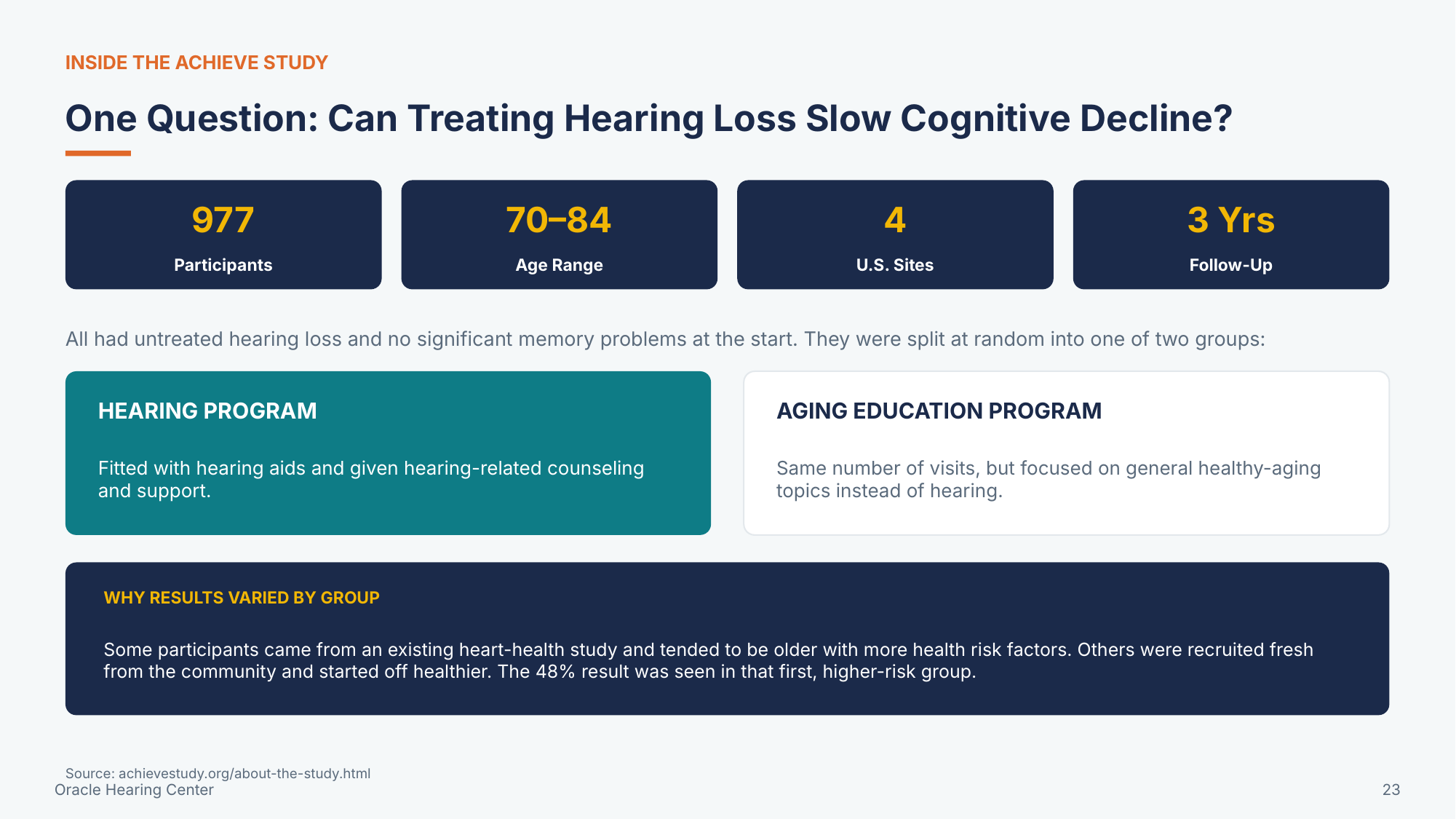
ACHIEVE was published in The Lancet, one of the world’s leading medical journals. It was the first large study to randomly assign people to either receive hearing care or not, which is the strongest way to test whether a treatment actually works.
What They Found
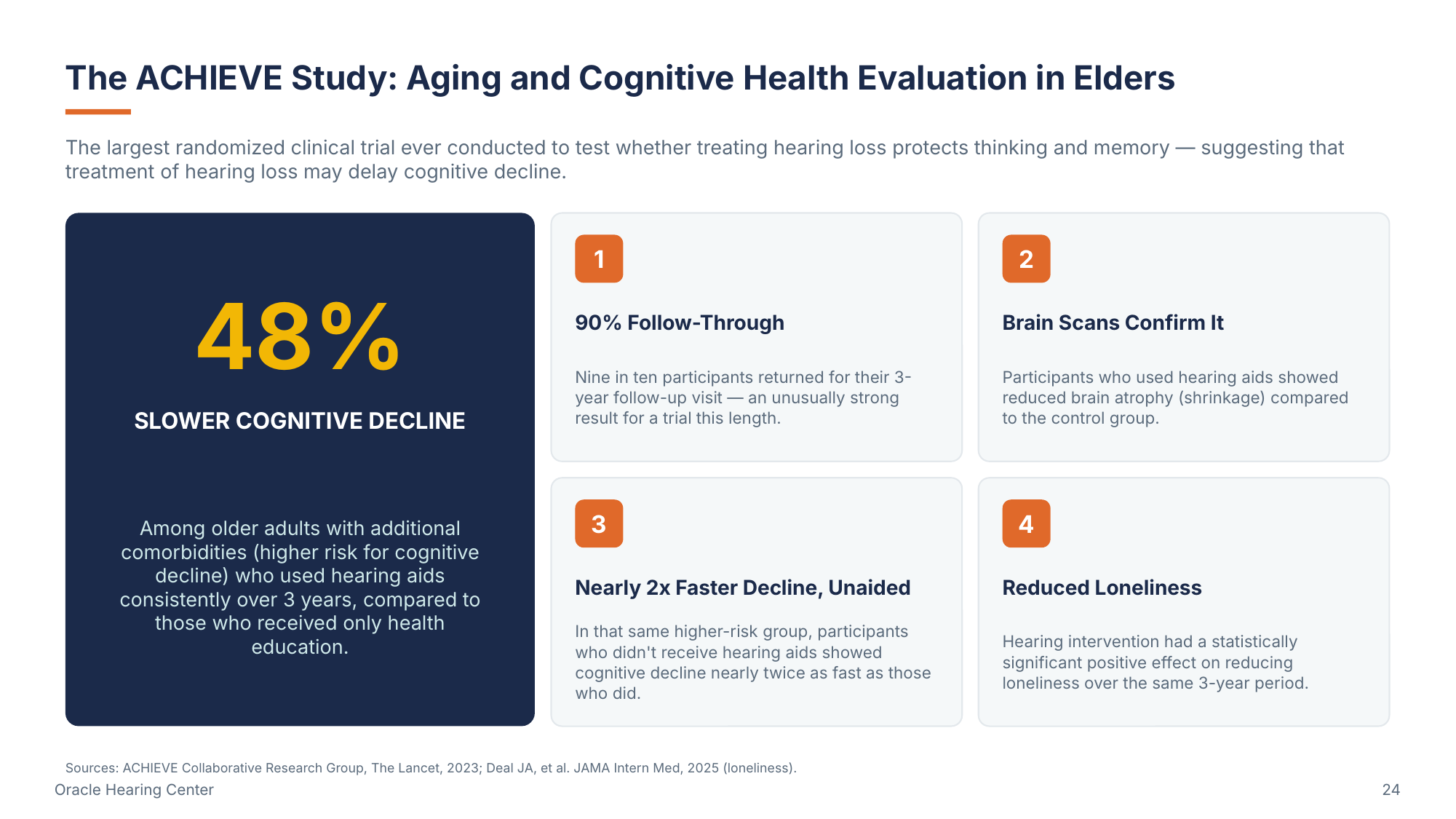
- For people at higher risk of memory decline, hearing care made a real difference. Their decline in thinking and memory was cut by nearly half (48%) over three years.
- For healthier participants, there wasn’t a measurable difference yet. Their memory was changing so slowly that three years wasn’t long enough to show an effect. Researchers are now following everyone for three more years.
- Across the board, people who received hearing care communicated more easily and felt less isolated and lonely.
What This Does and Doesn’t Mean
Headlines sometimes stretch research further than it goes. Hearing aids are not a guaranteed way to prevent dementia, and the 48% result applies to the higher-risk group, not every participant. What the study does give us is strong evidence that treating hearing loss supports brain health, especially for people with other risk factors, and that it helps people stay connected at any risk level.
It’s About the Care, Not Just the Device
The people in this study didn’t receive hearing aids in a box. They received complete care from an audiologist: careful fitting, verification that the hearing aids were working correctly in their ears, counseling, and follow-up visits. That’s the same kind of care we provide at Oracle Hearing Center, including Real Ear Measurements at your fitting and regular visits with repeat testing to keep your hearing aids matched to your hearing as it changes.
The Take-Home Message
- Get tested: Take our free 2-minute hearing screener: oraclehearingcenter.com/screener
- Book a visit: If you’re in our neck of the woods, schedule a baseline hearing exam and keep it in your records: oraclehearingcenter.com/schedule-an-appointment
- If you already wear hearing aids, wear them every day, all day.
- Keep up with your follow-up visits so your hearing aids stay tuned to your needs.
- Stay social. Conversation and connection are good for your brain.
- Start a family conversation: Notice the TV getting louder or someone saying “what?” more often? Share this with them.
FAQ
Will hearing aids prevent dementia?
No study can promise that. ACHIEVE showed that hearing care slowed decline in thinking and memory over three years for people at higher risk. That’s meaningful, but it isn’t the same as prevention.
I’m healthy. Does this study apply to me?
Healthier participants didn’t show a memory difference within three years, most likely because their memory was changing so slowly. They still communicated more easily and felt less lonely with hearing care, and the follow-up study will tell us more about the long term.
Would over-the-counter hearing aids give the same result?
The study tested complete audiologist care: a diagnostic hearing test, professional fitting, counseling, and follow-up. It didn’t test self-fit devices, so we can’t say they would produce the same result.
I already wear hearing aids. What should I do?
Wear them consistently and keep up with your follow-up visits. If your hearing aids are sitting in a drawer or something doesn’t sound right, call us. Small adjustments often make a big difference.
How do I know if I have hearing loss?
Our free online hearing screener is a quick first step. A full hearing evaluation with an audiologist gives you the complete picture, and you’ll receive a copy of your results.
Source: Lin FR, et al. Hearing intervention versus health education control to reduce cognitive decline in older adults with hearing loss in the USA (ACHIEVE): a multicentre, randomised controlled trial. The Lancet, 2023. Follow-up study: ACHIEVE Brain Health Follow-Up Study.

